
Fill-in Crosswords Unlimited
LR StudiosWord
4.7523.00 Reviews
- Version
- 2.46
- Installs
- 1.00M
- Age Rating
- Teen
Screenshots
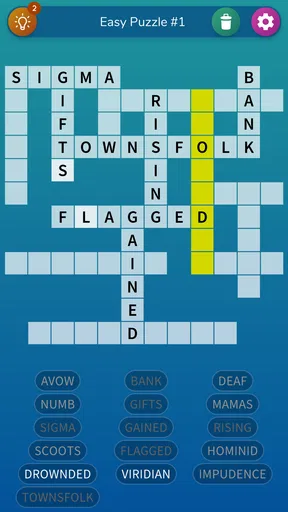
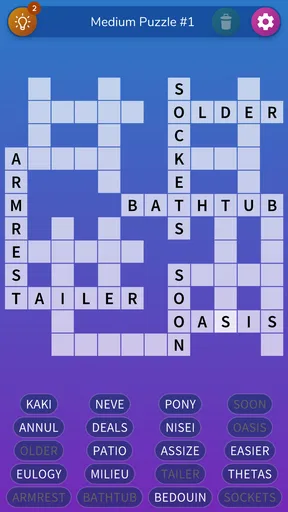
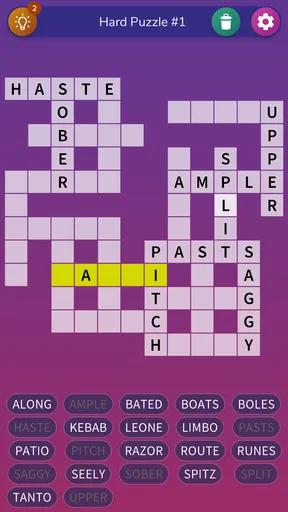
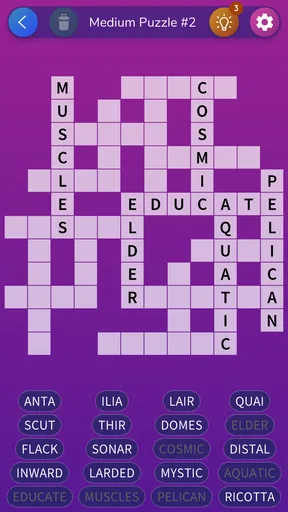
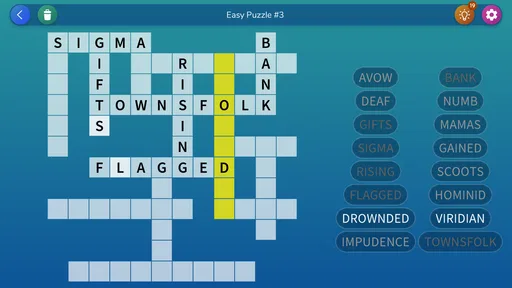
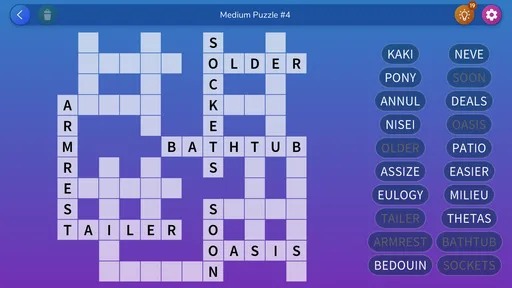
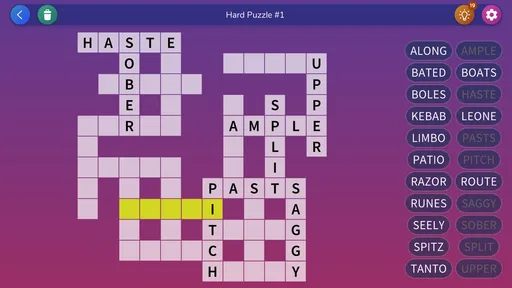
Our Review of Fill-in Crosswords Unlimited
 Analysis by Appyee
I usually know within the first few sessions whether a word game is going to become part of my routine or disappear from my phone. Fill-in Crosswords Unlimited made a good first impression because it keeps the central idea uncomplicated: complete crossword-style entries, think through the clues, and enjoy a quiet stretch of concentration. It is a free word game from LR Studios, aimed at people who want something mentally active without the pressure of a timer, a competitive ladder, or a complicated set of rules.
That simplicity is its strongest invitation. I can open it when I have a few spare minutes, solve at my own pace, and stop without feeling that I have abandoned a larger campaign. The game sits comfortably between a traditional crossword and a casual mobile puzzle. It is more focused than a quick word-search session, but less demanding than a newspaper crossword designed to test an experienced solver.
The important question, though, is not whether it is pleasant during the first week. Most puzzle games can provide that small burst of novelty. The better test is whether the puzzles still feel worthwhile after the initial curiosity fades. In my experience, this game has lasting value for players who enjoy a steady, low-pressure word habit, while people seeking constant variety, social competition, or a sharply escalating challenge may eventually find it too restrained.
Why the first week feels so approachable
The opening appeal comes from how little preparation the game asks of me. I do not need to learn a long rule set before solving anything. The familiar crossword structure gives the experience an immediate rhythm: read a clue, consider possible answers, use crossing letters to narrow the choice, and move forward. That makes it easy to recommend to someone who likes word puzzles but does not want a large game demanding regular attention.
I also appreciate the way this format supports short sessions. A puzzle can fill a quiet coffee break, a wait in a reception area, or the last few minutes before bed. Because the activity is based on recall and deduction rather than quick reactions, it feels suitable for relaxed play. I can pause when I want to think, return later, and treat the game as a small mental reset instead of another source of urgency.
The first few days are especially satisfying because each solved entry reinforces the next one. A clue that initially looks vague becomes easier once a couple of letters are in place. That creates a useful sense of progress without requiring dramatic rewards. The pleasure comes from making connections, and that is exactly the kind of reward I want from a quiet word game.
One practical tip is to avoid forcing an answer too early. When I get stuck, I leave the clue alone and work elsewhere in the grid. The crossing letters often turn a broad possibility into an obvious one. This is more than a basic solving trick: it prevents the game from becoming a frustrating test of isolated vocabulary and makes the whole puzzle feel like a connected problem.
The game’s average rating is 4.7 from around fifteen thousand ratings, and its audience has grown beyond a small niche, with over one million installs. Those figures do not guarantee that every player will enjoy the same style, but they fit my impression that the straightforward design has broad appeal. It is easy to understand, easy to sample, and gentle enough for casual players while still giving word enthusiasts something to work through.
A good fit for quiet concentration
I would particularly suggest trying it if you want to replace passive scrolling with a small activity that still leaves you feeling refreshed. A realistic routine would be opening one puzzle during a lunch break, solving the entries that come quickly, and leaving the stubborn clues for later. That approach turns the game into a repeatable habit rather than a single long sitting.
It can also work well for players who enjoy language-based thinking but dislike the pressure found in timed word games. There is room to reread clues, test a possible answer, and change direction. That slower pace makes the experience accessible to people who are more interested in accuracy and reflection than speed.
At the same time, I would not describe it as a complete substitute for every kind of crossword. Someone who wants a highly distinctive editorial voice, elaborate themed puzzles, or the feeling of tackling a difficult daily newspaper challenge may prefer a dedicated crossword publication. This game’s appeal is its approachable, repeatable format, not the prestige or personality of a particular puzzle editor.
What remains useful after the novelty fades
After the first month, the main question becomes whether solving still fits naturally into daily life. For me, the answer depends on expectations. If I treat the game as a small maintenance exercise for vocabulary, attention, and pattern recognition, it continues to make sense. It does not need to reinvent itself every session because the core loop is already pleasant.
The best long-term use is as a flexible mental warm-up. I might play before writing, during a break from reading, or whenever I want to shift my attention away from work. Solving a few clues gives my mind a defined task, which is more satisfying than opening a social feed and drifting through unrelated updates. The benefit is modest, but it is repeatable, and repeatable activities are often more valuable than spectacular ones that I use twice.
Another strength is that the game does not require me to organize a group or coordinate with friends. That makes it dependable for solo players. I can use it when my energy is low, when my schedule is irregular, or when I want a private challenge. In comparison, multiplayer word games can be more exciting but also more demanding: they depend on opponents, notifications, turns, or a willingness to perform under pressure.
There is a useful trade-off here. The same calm structure that makes the game easy to return to can also make it feel less memorable than a more theatrical puzzle title. I do not open it expecting a story, a collection of characters, or a major sense of achievement. I open it because I want a familiar type of thinking. That distinction matters when deciding whether it deserves permanent space on a phone.
For month-to-month use, I recommend creating a simple boundary around it. A short session is usually enough. If I keep playing only because I feel obliged to finish everything immediately, the relaxing quality starts to disappear. Stopping after a satisfying stretch, even with a few clues unfinished, preserves the reason to come back tomorrow.
How it compares with familiar alternatives
Compared with a paper crossword, the mobile version is more convenient and easier to keep nearby, but it does not provide the same physical ritual of a newspaper, pencil, and printed page. Compared with a word-search game, it asks for more interpretation and deduction, so it feels more mentally involved. Compared with an anagram game, it relies less on rapidly rearranging letters and more on understanding clues in context.
Those differences help identify the right audience. I would choose this game over a timed anagram title when I want calm concentration. I would choose a paper or publication-based crossword when I want a strong editorial identity or a puzzle with a distinctive theme. I would choose a competitive word game when I want social energy. Fill-in Crosswords Unlimited occupies the quieter middle ground, and it does that consistently.
It is also a better choice than many heavily layered mobile games for anyone who wants to avoid managing several systems at once. There is no need to learn a fictional world or maintain a collection before the central activity becomes enjoyable. That directness is refreshing, though players who enjoy unlocking content and customizing a game may find it sparse.
The maintenance burden is low, but not invisible
One reason I can imagine keeping this game installed is that it asks very little from me outside the puzzles. The basic commitment is simply opening it when I want a word challenge. That low maintenance makes it easier to build into an ordinary routine than games that depend on daily streaks, scheduled events, or constant attention.
The free entry point also lowers the risk of trying it. There are in-app purchases ranging from $0.99 to $10.99 per item, so I would still pay attention to any purchase prompts and decide in advance whether I want to spend anything. The sensible approach is to evaluate the core solving experience first rather than assuming optional spending is necessary for enjoyment.
From a device perspective, the game supports Android 7.1 and later, which covers older phones as well as newer models. Its current version is 2.46. I would still keep the app updated through the normal store process, especially if I rely on it as a regular offline-style pastime, because stability and compatibility matter more once an app becomes part of a routine.
The Teen content rating is worth noting for households choosing apps for younger users. A word puzzle may appear harmless at first glance, but the rating is the appropriate signal to check before installing it for a child. For teenagers and adults who simply want a crossword activity, the rating does not change the basic appeal of the game, but parents should still make their own decision rather than judging only from the genre.
My maintenance advice is simple: keep the game in a folder with other calm, low-pressure apps, and use it at a predictable moment rather than whenever boredom appears. That small change makes it less likely to become another app I open automatically and abandon just as quickly. It works best when I give the puzzle a purpose, such as a short break or a transition between tasks.
Where fatigue can begin
The largest risk is repetition. Crossword solving is naturally repetitive in structure, and this game does not need to disguise that fact. If I play for long stretches every day, the familiar sequence of clues and crossings can start to feel like work. The problem is not that the basic mechanic is weak; it is that even a good mechanic can lose its freshness when used without moderation.
I also think experienced crossword players may reach the limits of the presentation sooner than newcomers. Someone already comfortable with difficult clues may want more specialized vocabulary, stronger themes, or a more obvious progression in difficulty. A player who prefers a steady, approachable challenge will probably be happier than someone looking for a demanding test that continually stretches their ability.
Another possible source of fatigue is the lack of social tension. I enjoy playing alone, but there are days when I want a score to defend, a friend to challenge, or a shared puzzle to discuss. This game is not the right replacement for that experience. Its quiet nature is a strength when I need peace and a weakness when I want excitement.
Hints can also change the character of a puzzle. When I use help too quickly, the satisfaction of solving becomes thinner. I get better long-term value by treating a difficult clue as an opportunity to use the crossings, step away, and return later. If a player expects instant completion, the game may feel slower than other word apps, but that slower pace is part of what makes it relaxing.
There is a further trade-off between convenience and depth. A simple mobile crossword can be picked up almost anywhere, but simplicity may mean fewer reasons to explore once I understand the format. Players should skip this title if they need a large progression system, frequent novelty, elaborate presentation, or a strong competitive community. A more feature-heavy word game would be a better match in those cases.
Small habits that improve the experience
I get more from the game when I separate quick clues from uncertain ones. I solve the obvious entries first, then use the resulting letters to revisit the harder sections. This keeps the puzzle moving and reduces the temptation to guess randomly. It also makes the experience feel more like reasoning than memorization.
I prefer using it when I am alert enough to think but not so tired that every clue feels irritating. Late at night, I may choose a short session and stop as soon as concentration drops. During a commute or waiting period, I can let the puzzle occupy a few minutes without needing sound or a large amount of attention. The game is most effective when it supports the moment instead of competing with it.
For vocabulary growth, I sometimes note an unfamiliar answer after solving it and try to recall it later without reopening the puzzle. That turns a passing clue into a small learning exercise. I would not treat the game as a formal language course, but it can encourage curiosity about words that I do not use often.
Finally, I avoid judging a session by how many entries I complete. The useful part is the quality of attention, not a personal quota. That mindset is especially important for a game whose lasting value comes from maintenance. If I turn every quiet puzzle into a productivity contest, I remove the relaxed quality that made it attractive in the first place.
My long-term verdict
Fill-in Crosswords Unlimited earns lasting space on my phone if I want a dependable solo word habit rather than a constantly changing game. Its free price makes it easy to test, LR Studios keeps the concept direct, and the strong user response suggests that the uncomplicated approach works for many people. I like that I can begin solving almost immediately and return whenever I need a calm mental break.
Its long-term value is not based on spectacle. It comes from repeatability: a familiar puzzle format, a manageable pace, and enough mental involvement to make a short session feel purposeful. I would recommend it to casual crossword players, adults who enjoy word challenges, and anyone trying to replace a few minutes of aimless scrolling with something more focused.
I would be more cautious about recommending it to expert solvers who need increasingly difficult puzzles, players who depend on competition, and people who lose interest when a game does not offer a visible progression system. For those users, a specialized crossword app, a publication-based puzzle service, or a multiplayer word game may provide stronger reasons to return.
My final recommendation is to install it with modest expectations and give the format a fair week. Do not rush through every clue, do not use help before the crossing letters have had a chance to work, and notice whether you naturally want to return during ordinary breaks. If you enjoy that rhythm, the game can become a useful low-maintenance companion. If you need constant novelty, its calm simplicity will probably feel limiting once the first-week appeal has passed.
In my experience, that is a respectable result. Not every app needs to become an obsession. This one is at its best as a small, repeatable act of concentration—something I can pick up, think through, and put down without carrying extra noise into the rest of my day.
Verdict
Strengths of Fill-in Crosswords Unlimited
- Unlimited puzzles provide lasting value for regular crossword fans.
- Simple interface makes grids easy to read and navigate.
- Hints help players progress without revealing an entire solution.
- Works well for short sessions or longer, relaxed play.
- A broad range of puzzles can suit different experience levels.
Limitations of Fill-in Crosswords Unlimited
- Some puzzles may feel repetitive after extended play.
- Advanced players may find certain grids too easy.
- Hints can reduce the challenge if used too frequently.
- Small text or grid controls may be less comfortable on phones.
- Puzzle quality and difficulty may vary between individual grids.
Similar Picks in This Category
View All
Word Search - Word Puzzle Game
Bluetile4.8

Word Search Quest - Puzzles
Blackout Lab4.8

CodyCross: Crossword Puzzles
Fanatee, Inc.4.7

Words of Wonders: Crossword
Fugo Games4.9

Wordscapes: Word puzzle game
PeopleFun4.7

Word Search Explorer
PlaySimple Games4.9
Frequently Asked Questions
What is Fill-in Crosswords Unlimited?
Fill-in Crosswords Unlimited is a word puzzle game based on the classic fill-in crossword format. Instead of solving clues, you place groups of letters or complete words into the correct spaces on a crossword-style grid. It is designed for players who enjoy vocabulary challenges, pattern recognition, and relaxed puzzle sessions without the pressure of a timer or complicated controls.
How does the gameplay work?
Each puzzle provides a crossword-shaped board together with a selection of words that must be fitted into the available spaces. You study the length and intersecting letters of each entry, then drag or select the word that matches the correct position. The crossings gradually confirm your choices, making the game accessible to beginners while still offering a satisfying challenge on more difficult boards.
Does Fill-in Crosswords Unlimited require an internet connection?
The game may be playable offline for many of its core puzzles, which makes it convenient for travel, commuting, or places with limited connectivity. However, certain features can depend on an internet connection, including advertisements, analytics, updates, cloud-related functions, or additional content. It is best to launch the game online once after installation and check which features remain available offline on your device.
Is Fill-in Crosswords Unlimited free to download and play?
Fill-in Crosswords Unlimited can generally be downloaded without an upfront purchase, but the exact business model may vary by platform and version. Free gameplay may include advertising, optional purchases, or limits on particular features. Before downloading, review the store listing for current information about ads, in-app purchases, subscriptions, and whether any puzzle packs or convenience tools require payment.
Is the game suitable for beginners and children?
The straightforward drag-and-place format makes Fill-in Crosswords Unlimited relatively easy for newcomers to understand, especially because players do not need to solve traditional crossword clues. Nevertheless, the vocabulary and puzzle difficulty can vary, so younger children may need help with unfamiliar words. Parents should also review the app-store age rating, advertising content, and purchase settings before allowing children to play.
Play our best games!


